

Public Policy Update – March 2025
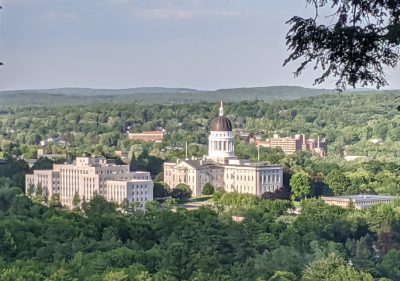 Legislative Committees in the Maine State House are entering their busiest stretch as hundreds of new bills are printed each week and schedules are packed with hearings and work sessions. At the same time, land trusts across the state continue to assess the messages coming out of Washington and look for answers to the future fate of various federal land conservation programs.
Land for Maine’s Future Funding
On March 13, the Agriculture, Conservation, and Forestry (ACF) Committee will be holding a hearing on this session’s first of many bills seeking new Land for Maine’s Future (LMF) funds. Sponsored by Senator Russell Black (R-Franklin County), LD 593 would direct $10 million each year to the program. This bipartisan legislation seeks to maintain the recent momentum that began in 2021, when Maine policymakers approved a $40 million LMF investment. The program is on pace to spend or commit its remaining funds by the end of 2025. Over the past few years, LMF has been working to conserve a dozen farms, seven working waterfronts, more than 16,000 acres of working forests, thousands of acres of critical wildlife habitat, and more than 80,000 acres of land for traditional outdoor recreation.
Other Funding Initiatives
Legislators have also put forward other funding initiatives related to land conservation. Senator Grohowski (D-Hancock County) has introduced two bills to support maintenance of State Historic Sites (LD’s 761 and 762). Senator Bailey (D-York County) has proposed a bond issue to support climate resiliency investments (LD 560). And, Senate President Daughtry (D-Cumberland County) has proposed a bond issue (LD 836) to support culvert upgrades for stream crossings.
Public Lands Cap

Not all new legislation has been supportive of land conservation. In early February, the ACF Committee held a public hearing on LD 183, an act to limit public land ownership in Maine. The bill uses an overly broad definition of public land to include millions of acres of private land. During the hearing, bill proponents offered many inaccurate statements in defense of the bill. However, LD 183 has been a good opportunity to provide legislators with a more accurate description of land conservation and land trust activities in Maine, including the following information gathered in the 2024 census of Maine’s land trusts:
- Annually, land trusts pay more than $1.5 million in property taxes and other payments to local governments.
- Property taxes or payments in lieu of taxes are paid on 97.8% of land trust conserved lands.
- More than 94% of all land conserved by land trusts is open for traditional uses, including hunting.
- Land trust conserved lands include more than 2,000 miles of hiking trails, 1,000 miles of snowmobile trails, and 650 miles of ATV trails.
- More than 86% of all land trust conserved lands are managed as working forests.
- Land trusts have conserved more than 40,000 acres of farmland and more than 60 sites used by commercial fishermen to access coastal waters.
Tribal Legislation
Later this spring, the Legislature’s Judiciary Committee will be holding hearings on three priority tribal bills: LD 395, An Act to Restore Access to Federal Laws Beneficial to the Wabanaki Nations; LD 785, An Act to Enact the Remaining Recommendations of the Task Force on Changes to the Maine Indian Claims Settlement Implementing Act; and LD 958, An Act to Prohibit Eminent Domain on Tribal Lands. All three bills have a bipartisan list of sponsors. For more information on these proposals, visit the Wabanaki Alliance.
Federal Funding Questions
This year, it has been difficult keeping up with federal issues, whether it is the most recent executive order or latest news headline. Maine Coast Heritage Trust has been busy gathering information to try to figure out what is happening, what is feared could happen, and what is likely to happen. We are looking to the Land Trust Alliance for their guidance and to hear about impacts in other states. The Alliance has a new website devoted to this topic: New Federal Landscape.
At the same time, MCHT has been busy collecting information from Maine Land Trust Network members over the past couple of weeks. We have heard from nearly 20 land trusts with updates on their interactions, or lack thereof, with federal agency staff regarding already approved conservation grant applications. As we continue to learn more, we will look for ways to strategically respond, including communicating concerns with our Congressional delegation. If you have any information to share on this topic, please reach out to MCHT Public Policy Director Jeff Romano.