

State Legislative Recap
 The Maine Legislature got off to a slow start in 2025, but momentum picked up in March. Committee calendars were packed with public hearings and work sessions through April and early May. Then all attention turned to the House and Senate as they deliberated on the more than 1,985 bills introduced this year. There were many proposals impacting the work of land trusts in Maine. Here are some highlights of bills that Maine Coast Heritage Trust (MCHT) worked to pass or defeat.
Legislative Wins – Enacted Legislation
Conservation Lands Registry
The Governor introduced LD 1072, a bill that includes three distinct sections. MCHT worked with Land for Maine’s Future (LMF) staff to develop section 3 to revamp the state’s conservation lands registry. The idea for this change emerged in the fall of 2024 during Maine Land Trust Network regional meetings.
Created in 2007 for easements and expanded in 2017 to include fee owned lands, the conservation lands registry has become overly burdensome for land trusts and continues to not provide data that the public and policymakers seek. Language in LD 1072 will allow LMF staff to move away from the current on-line portal and, instead, require land trusts to include all conservation lands in the state’s GIS conservation lands dataset to meet annual reporting requirements. MCHT will be working with LMF in the months ahead on facilitating this transition, with the goal of creating a more streamlined process for land trusts and better information for the public.
LD 1072 also included one section to clean up outdated language in LMF statutes and another section with provisions that allow for the acquisition of options to purchase at agricultural value (OPAV), a mechanism to support farmland conservation.
Landowner Liability for Public Access Guarantees
Senator Brenner introduced LD 1953 to help provide greater assurance for landowners who are looking to provide permanent, guaranteed public access to private property. The bill creates a vested right based on the landowner liability protections at the time the public access rights are granted, even if the legislature were to reduce or eliminate those legal protections in the future. Rangeley Lakes Heritage Trust drafted the bill to help with an ongoing project in western Maine. MCHT, The Nature Conservancy (TNC), Forest Society of Maine, the Mills Administration, and others added their support at the hearing. The Agriculture, Conservation, and Forestry Committee voted unanimously in favor of LD 1953.
Renewable Energy Wildlife Habitat Mitigation
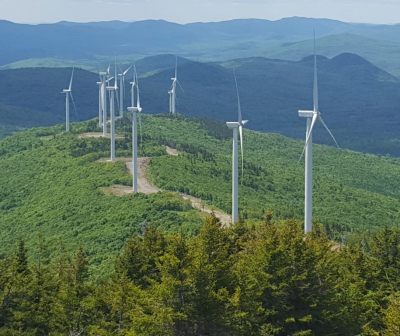 In 2023, MCHT, Sportsman’s Alliance of Maine (SAM), Maine Audubon, Maine Farmland Trust, TNC, the Mills Administration, Maine natural resource agencies, and representatives from Maine’s renewable energy sector held a series of meetings to discuss the impacts of renewable energy on wildlife habitats and farmlands. Out of these conversations emerged LD 1881 which directed agency rulemaking. While there was some agreement on the framework, the renewable energy sector objected to some parts of the final legislation.
Enacted in 2023, LD 1881 initiated two parallel rulemaking processes over the course of 2024. The Department of Agriculture, Conservation, and Forestry (DACF) worked on rules to address impacts associated with solar arrays on high value agricultural lands. At the same time, the Department of Environmental Protection (DEP) began drafting rules to more clearly define its authority under the Site Development Law to regulate wildlife habitat impacts, with a special focus on large undeveloped habitat blocks.
This spring, the legislature enacted LD 269 and LD 1976 to approve the DEP agency rules, which largely brought this two-year effort to a close. The state now has DACF rules to address solar development on certain high value farmlands, and the DEP has clearer laws and rules associated with impacts from solar, wind, and transmission corridors on critical wildlife habitats. A key component of both the DACF and DEP rules is that developers now will have the option to mitigate unavoidable impacts by making payments that can be used to conserve other lands that have similar attributes.
Public Access for Outdoor Recreation
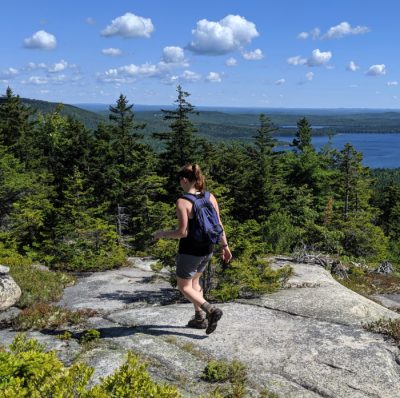
Legislators introduced a few bills to look at public access on private lands. MCHT joined TNC and SAM, offering testimony in support of LD 1308, a proposal sponsored by Senator Baldacci. The legislature’s Inland Fisheries and Wildlife Committee made some friendly amendments before unanimously supporting it. LD 1308 directs the Department of Inland Fisheries and Wildlife (DIFW) and the DACF to establish a working group to explore ways to maintain and expand public access to privately owned lands in the State. The working group will have twelve members including a “representative of a conservation organization that manages land or conservation easements.” Findings and recommendations are due back to the legislature by February 15, 2026.
Defeating Bad Legislation
Non-profit Property Tax Exemption
Rising property taxes have become a growing concern for communities around the state. With little evidence to support their claims, some have focused on tax exempt nonprofit properties as a significant reason. As a result, legislators proposed two bills in 2025 to allow municipalities to require tax exempt nonprofit properties to pay property taxes. The most concerning of the two bills was LD 1795.
While LD 1795 was written for all nonprofits, the bill’s proponents were especially focused on land trusts. Unfortunately, their testimonies blurred the lines between government owned properties, private lands enrolled in Tree Growth, municipal owned schools and buildings, and land trust conserved lands. In one example, critics blamed land trusts for
100% of the tax-exempt properties in a Washington County municipality with no tax-exempt land trust properties. Some policymakers also continue to mistakenly assert that all land trust conserved land in Maine is tax exempt. While most land trust owned lands are eligible for tax exemption, statewide data shows that more than 92% of these lands have remained on the tax rolls.
MCHT worked with the Maine Association of Nonprofits and others to oppose LD 1795. While the bill failed in 2025, the Legislature’s Taxation Committee is not done looking at this issue. Through LD 1770, the legislature supported the creation of a real estate property tax relief task force that may consider policies focused on nonprofits and land trusts. It will be critical to track the work of the task force over the next year and a half, to ensure any land trust-related recommendations are grounded in actual data and not baseless assumptions.
Public Lands Cap
Some of the same misinformation that contributed to the attempt to tax land trust properties inspired the drafting of LD 183. This bill proposed to cap public conservation land in each county. However, advocates for the legislation defined public land so broadly as to include millions of acres of private land, public highway right of ways, and other non-conserved public properties. At the same time, bill proponents spread misinformation regarding conserved lands and property taxes and failed to acknowledge the roll of land conservation in the protection of working landscapes critical to fishing, farming, and forestry. MCHT worked with the Bureau of Parks and Lands and others to provide the Agriculture, Conservation, and Forestry Committee with real world data. In response, the committee voted unanimously against the bill.
Fell Short/Next Session
LMF Funding
Throughout the session, MCHT worked with SAM, TNC, and others in support of multiple ways to fund LMF. Facing the most challenging fiscal situation in years, the Governor and state legislature focused a lot of time finalizing the state’s two-year budget, which they successfully passed in the final days of the session. Time then ran out to focus on LMF and other similar state capital investment priorities. However, in the waning days of the session, the Governor’s office and legislative leaders have reiterated their commitment to figuring out how to best fund the Maine’s land conservation needs in the years ahead. There will be ongoing conversations through the end of this year, followed by a push to secure renewed LMF funding when the legislature returns in January. We remain optimistic that a solution will be found.
Open Space
MCHT worked closely with TNC, Maine Audubon, and the Mills Administration on LD 1630, a bill to modestly improve the state’s Open Space current use tax law. Roughly 40% of the land enrolled in Open Space is owned by lands trusts and the remaining 60% by private landowners. The bill would not have changed the benefit for land trusts using the program, but it would have made Open Space more appealing to private landowners.
The inspiration for this legislation came out of the Governor’s 2021 Forest Carbon Task Force. Maine Municipal Association (MMA), supportive of a 2023 version of this legislation, decided to oppose this year’s bill, even though it would have had a much lower fiscal impact on its members. In the end, the Taxation Committee was not interested in supporting LD 1630.
Tribal Bills
Wabanaki Tribal governments have supported a variety of bills this session. Two of their highest priority bills, LD 395 and LD 785, have been carried over to 2026, while a third one (LD 958) failed to be enacted after the legislature sustained the Governor’s veto. LD 395 proposes to allow Wabanaki Nations to access some beneficial Federal Laws that are available to most other federally recognized tribes. LD 785 is another attempt to enact recommendations made in 2020 by a Task Force on Changes to the Maine Indian Claims Settlement Implementing Act. Both LD 395 and LD 785 will have public hearings in 2026. LD 958 would have prohibited state use of eminent domain on most tribal lands. MCHT joined hundreds of other supporters, providing testimony in favor of the bill. For a more comprehensive update on tribal bills, visit the Wabanaki Alliance website.