

Another State Legislative Session Concludes
The session’s highlight was enactment of legislation to secure ongoing Land for Maine’s Future (LMF) funding.
The Maine Legislature completed their work on April 29, ending the second session of the two-year legislative cycle. It was contentious at times, which is not too surprising in an election year. Mostly under the radar, a handful of land conservation policy priorities enjoyed success, while a variety of other issues related to the work of land trusts had mixed results. The session’s highlight was enactment of legislation to secure ongoing Land for Maine’s Future (LMF) funding.
New LMF Funding to Arrive this Summer
MCHT, The Nature Conservancy (TNC), and the Sportsman’s Alliance of Maine led the effort to establish, for the first time in the program’s history, on-going, dedicated LMF funding. The three organizations partnered with Democratic Senate Majority Leader Teresa Pierce, Governor Janet Mills, Maine Land Trust Network members, and the LMF Coalition to get the proposal over the finish line late in the session. Beginning this July, the state will be depositing 25% of the investment income generated each month on the state’s Budget Stabilization Fund into the LMF Trust Fund. More than $7.5 million is expected in year one, which runs from July 2026 to June 2027.
Public Lands Funding Shortfall Addressed
Historically, the Maine Bureau of Parks and Lands (BPL) has funded forest management, wildlife habitat protection, and outdoor recreation activities on the state’s 640,000 acres of public lands, mostly using revenue from sustainable timber harvesting from those same lands. Maine’s public lands include iconic natural areas such as the Cutler Coast, Tumbledown Mountain, and Nahmakanta Lake. Unfortunately, the market for forest products has been challenging recently, threatening a shortfall in the Public Land’s annual budget. The Governor and the legislature stepped up to fill the gap with $2.25 million from Maine’s General Fund. The agency is currently looking into finding a more long-term solution, should the timber markets not rebound.
Maine Natural Areas Program Moved 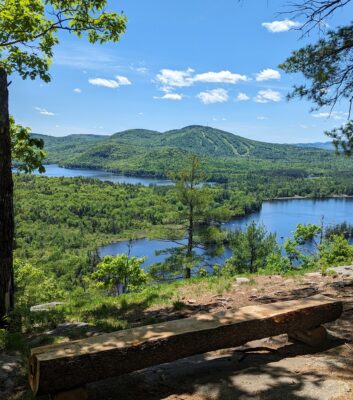
In early April, the legislature enacted LD 2118, a bill to move the state’s Natural Areas Program from the Department of Agriculture, Conservation, and Forestry (DACF) to the Department of Inland Fisheries and Wildlife (DIFW). The bill did not make substantive changes to the program. However, both departments saw value in this move to bring better coordination and efficiency to achieve the program’s mission, which is to facilitate conservation of Maine’s biodiversity by providing comprehensive information and scientific expertise on at-risk species, natural ecosystems, wildlife habitats, ecological reserves, and invasive plants to landowners, developers, resource managers, towns, and other conservation partners.
Many Wabanaki Bills Passed
MCHT, TNC, and the Wabanaki Alliance partnered together to successfully enact LD 1054. This legislation made minor, but significant changes to the state’s conservation easement statute to more explicitly grant tribal governments the right to hold conservation easements and to be clear that conservation easements could be used to protect tribal interests, including cultural and archeological resources. Tribal nations also made progress on other policy fronts in 2026, including securing rights to internet gaming, gaining free admission for tribal members to Maine State Parks, and passage of legislation to strengthen Wabanaki studies in Maine schools. Hundreds once again testified in support of tribal sovereignty legislation. While this effort fell short this session, prospects for success in 2027 are more encouraging.
Housing Policy Improved
In 2025, the legislature passed LD 1829, a bill to ramp up housing construction across the state. Unfortunately, some of its changes made it more difficult for municipalities and regional planners to protect natural resources. This year, MCHT worked with local land trusts to play a limited, but supportive role helping Maine Municipal Association, GrowSmart Maine, and others as they took the lead advocating for enactment of LD 2173. This bill fixed a variety of issues with the previous legislation, such as ensuring municipalities have the necessary tools to manage growth, protect working lands, and conserve open spaces, especially outside of designated growth areas. It also extended deadlines to provide ample time for municipalities to amend ordinances.
Property Tax Task Force Bears Watching 
A minority of legislators from both parties continue to float ways to generate revenue for municipalities from charitable organizations including land trusts. In response, MCHT continues to work with the Maine Association of Nonprofits to closely monitor the Legislature’s two-year Real Estate Property Tax Relief Task Force. It is critical that the taxing of land trusts or other nonprofits does not become a scapegoat solution to address the rising property taxes being caused by other factors in the state.
Data Centers Raising Concerns
With proposed data centers surfacing across Maine, policymakers worked on LD 307, legislation to establish an 18-month moratorium on the development of future data centers, At the same time, the bill called for the creation of a commission to study the issue and develop recommendations for how Maine should regulate this activity. However, the legislation failed to pass this year, with the Governor arguing that the bill was too broad in its application. Data centers have generated concerns for land trusts across the country. MCHT will be taking a closer look at this issue in the months ahead. Policymakers are likely to consider data center legislation again, when they return in 2027.